
Automotive & Automotive Ancillaries
Finite Element Analysis (FEA) plays a major role in the automotive industry by simulating real-world conditions on vehicle parts and systems. It helps engineers understand stress, deformation, heat transfer, and vibrations in components. This allows weak areas to be identified early in the design process. Manufacturers can improve performance and safety before production. It also reduces the need for physical testing, saving time and cost.
- • Evaluates structural strength and crashworthiness for safety compliance.
- • Supports thermal and NVH analysis to improve comfort and performance.
- • Optimizes designs for light weighting while maintaining durability.
- • Ensures reliability of ancillary components like brackets and fuel systems.
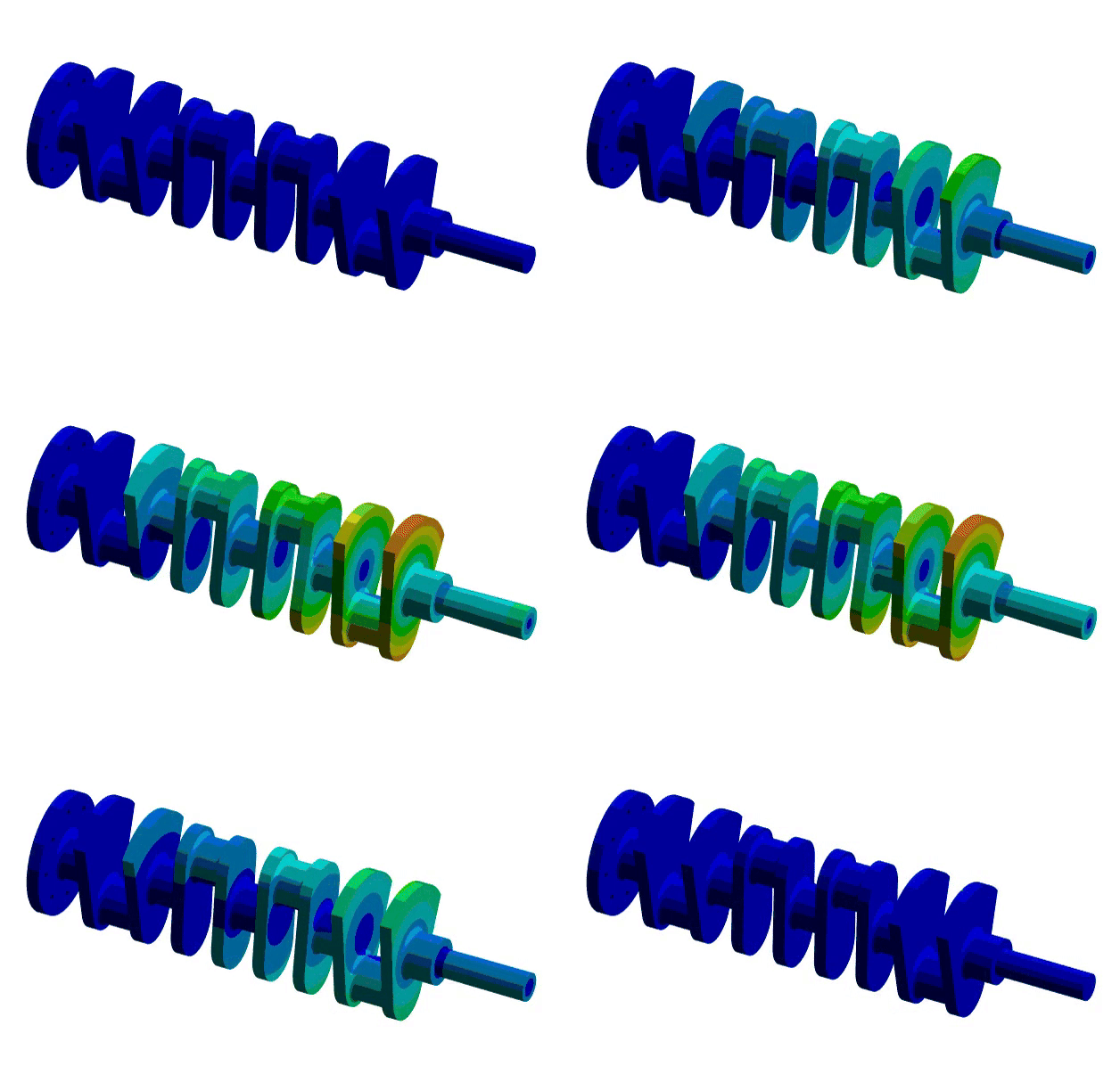
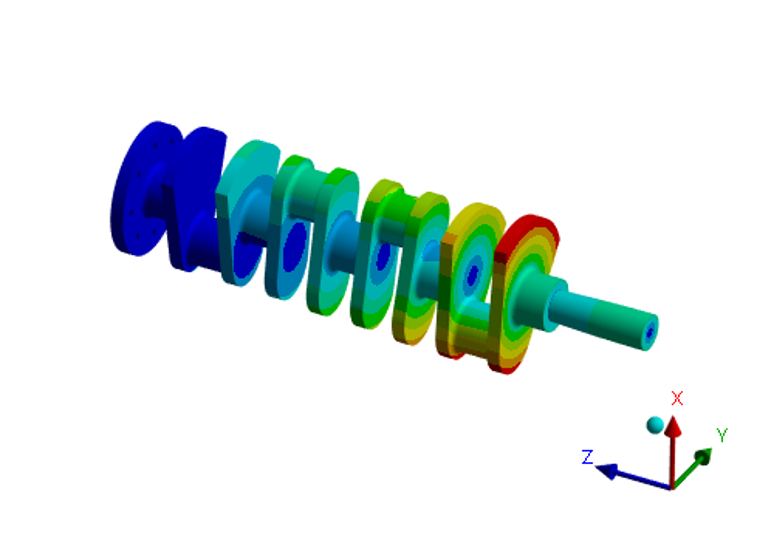
- • Analyses crankshaft behaviour under combustion loads, torsional vibrations, and inertial forces.
- • Identifies high-stress regions and predicts fatigue life to prevent failures.
- • Simulates various loading scenarios to optimize geometry and material usage.
- • Enhances durability and performance while reducing reliance on prototypes and physical testing.
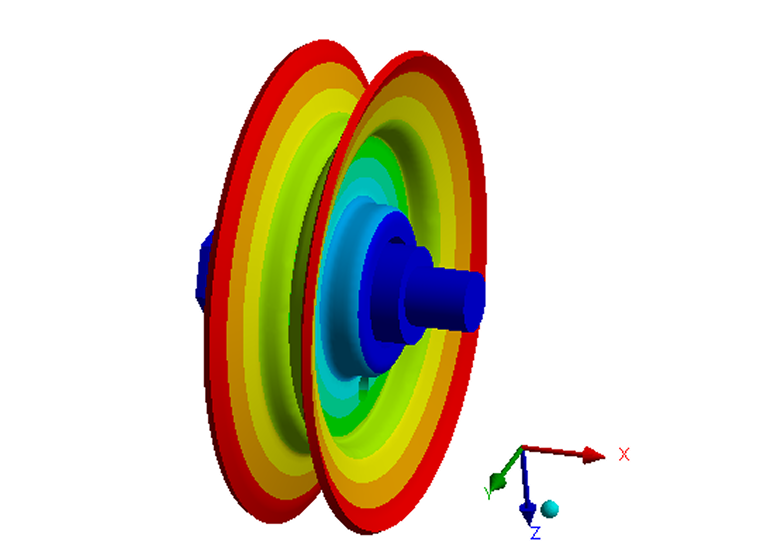
- • Evaluates pulley structural integrity under belt tension, rotational forces, and dynamic loads.
- • Identifies stress concentrations around the hub, grooves, and keyways to prevent failure.
- • Optimizes material and geometry for weight reduction without compromising strength.
- • Ensures reliability in high-speed or heavy-duty applications by addressing fatigue and imbalance risks.
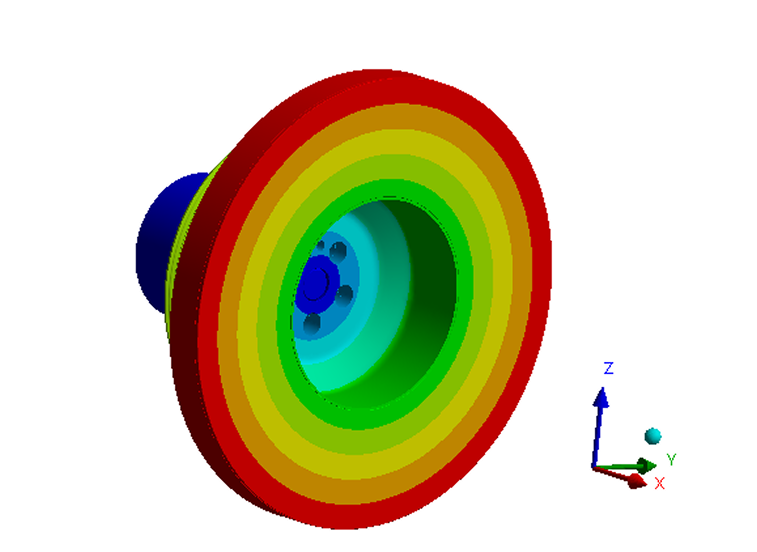
- • Assesses damper performance under dynamic loads, vibrations, and thermal effects.
- • Evaluates structural integrity of the housing, mounting points, and internal components.
- • Predicts deformation, stress distribution, and potential fatigue failure for long-term reliability.
- • Supports design optimization for improved durability, weight reduction, and efficient energy dissipation.