
Medical Sciences
Finite Element Analysis (FEA) is widely used in the biomedical field to study how medical devices and biological structures behave under real-life loads. It helps analyse stress, strain, and deformation in implants to ensure safety and compatibility. FEA improves implant design for comfort, longevity, and better interaction with human tissues. It also supports the development of prosthetics by simulating body movements and forces. This leads to safer, more durable, and patient-specific medical solutions.
- • Ensures implants like hip joints and dental implants can withstand real-world loads.
- • Improves comfort and long-term performance through stress and deformation analysis.
- • Supports prosthetic design by evaluating motion and load conditions.
- • Enables patient-specific customization for better fit and outcomes.
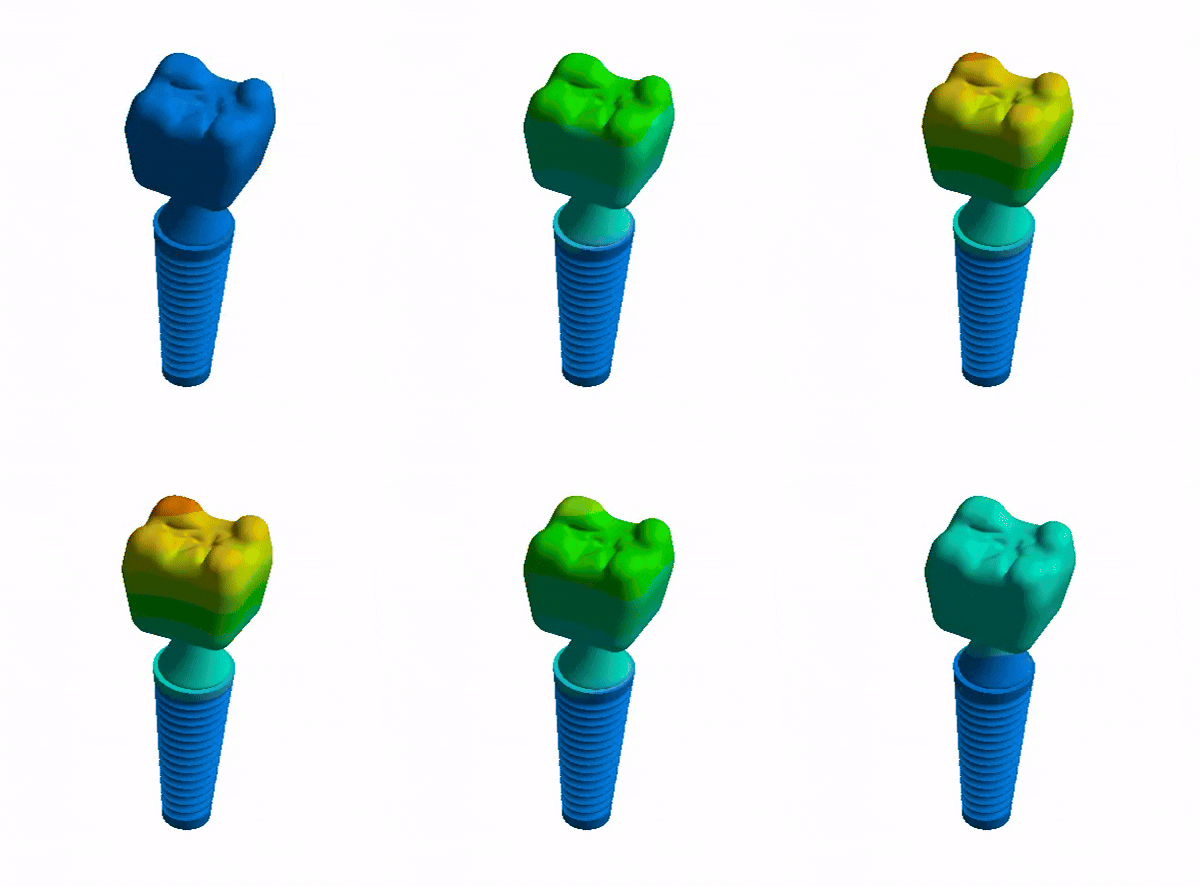
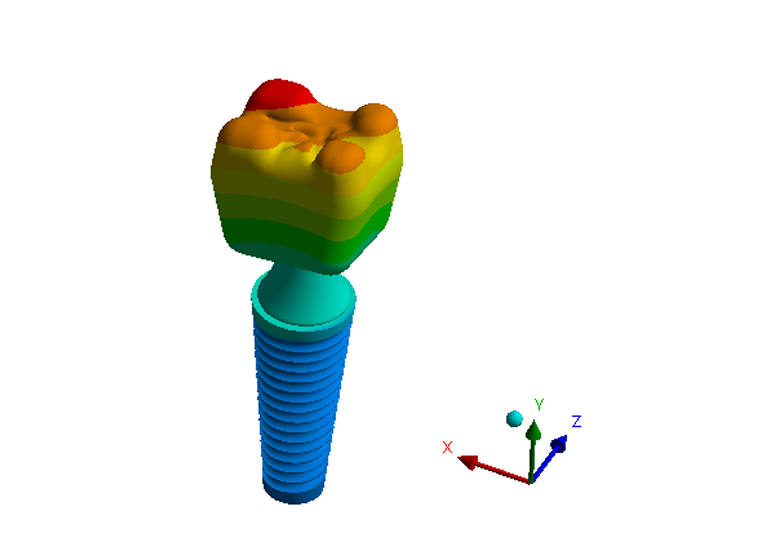
- • Evaluates load-bearing capacity of the implant–abutment–bone system under chewing and bite forces.
- • Identifies stress concentrations at the implant neck, abutment interface, and surrounding cortical bone to prevent failure or bone loss.
- • Assesses contact stresses, micromotion, and stability under cyclic loading for long-term osseointegration.
- • Optimizes implant geometry and material selection to improve stress distribution, durability, and patient safety.
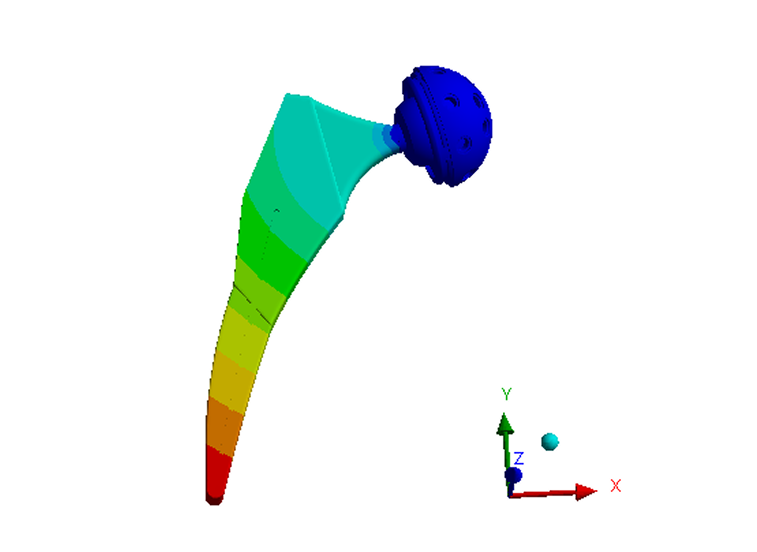
- • Evaluates load-bearing capacity of the hip implant under walking, stair climbing, and impact loads.
- • Identifies stress concentrations at the femoral stem, neck, head–cup interface, and bone–implant junction to prevent failure or loosening.
- • Assesses contact stresses, wear, and stability under cyclic physiological loading.
- • Optimizes implant geometry and material selection to improve stress distribution, durability, and patient safety.
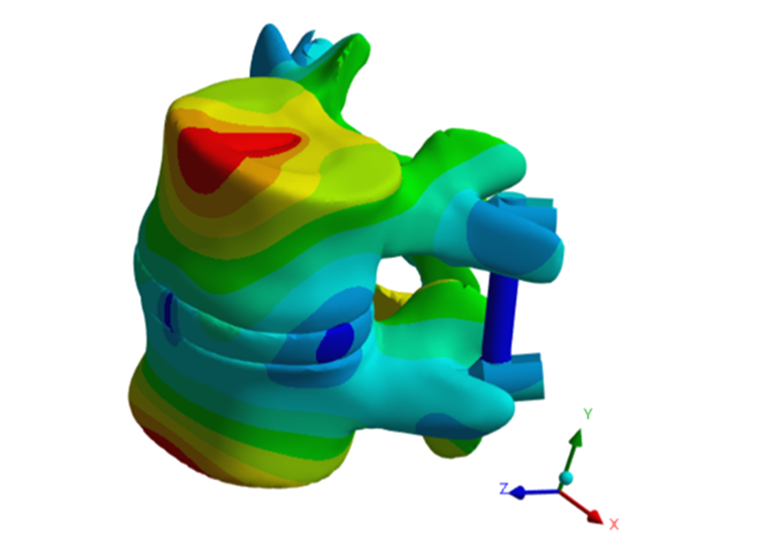
- • Evaluates load-bearing capacity of the hip implant under walking, stair climbing, and impact loads.
- • Identifies stress concentrations at the femoral stem, neck, head–cup interface, and bone–implant junction to prevent failure or loosening.
- • Assesses contact stresses, wear, and stability under cyclic physiological loading.
- • Optimizes implant geometry and material selection to improve stress distribution, durability, and patient safety.