
Material Handling Equipment's and Robot Structures
Finite Element Analysis (FEA) is vital for designing strong and reliable material handling equipment and robotic structures. It helps evaluate load-bearing capacity to ensure frames, arms, and joints can handle operational stresses. FEA predicts fatigue and failure, improving long-term durability. It analyses dynamic effects like acceleration, deceleration, and vibration for precise movement. FEA also supports optimization to create lightweight, rigid, and energy-efficient designs.
- • Ensures components withstand structural and operational loads.
- • Identifies fatigue points to extend system lifecycle.
- • Improves stability and accuracy through dynamic analysis.
- • Optimizes structures for reduced weight and energy use.
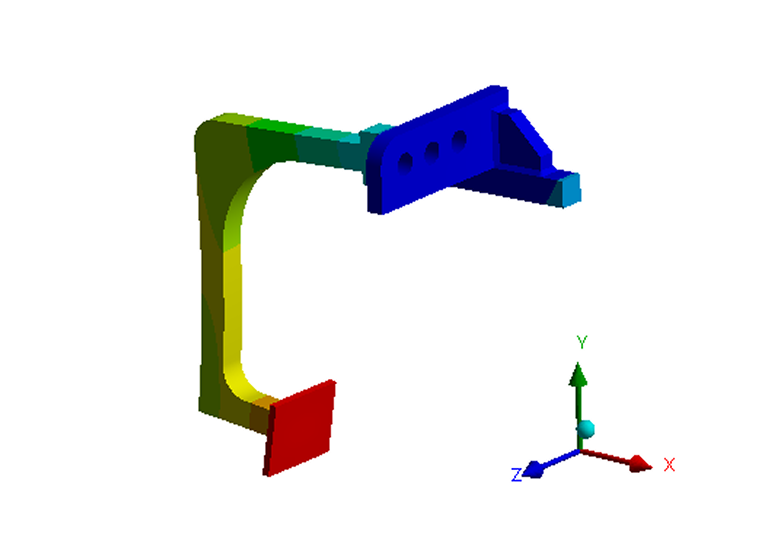
- • Evaluates structural strength of hooks, shackles, andslings under heavy lifting loads.
- • Identifies stress concentrations to prevent deformation, cracks, or sudden failure.
- • Assesses safety factors and compliance with lifting standards and regulations.
- • Optimizes design for durability, weight reduction, and reliable load-handling performance.
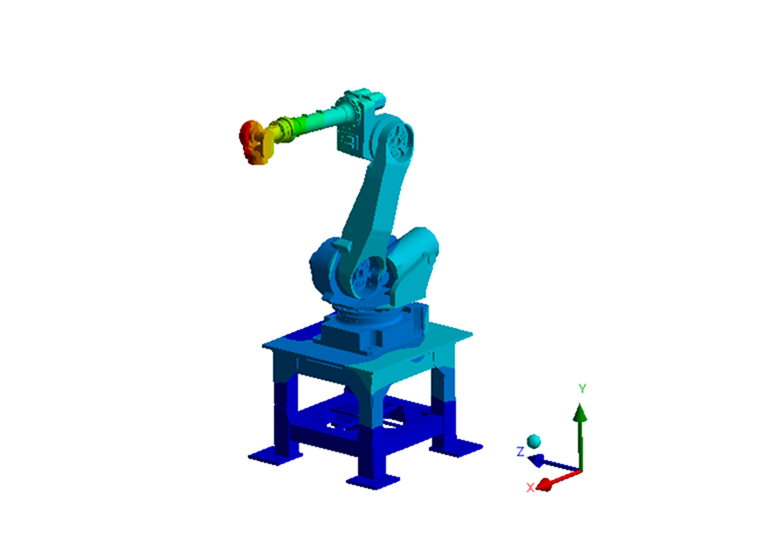
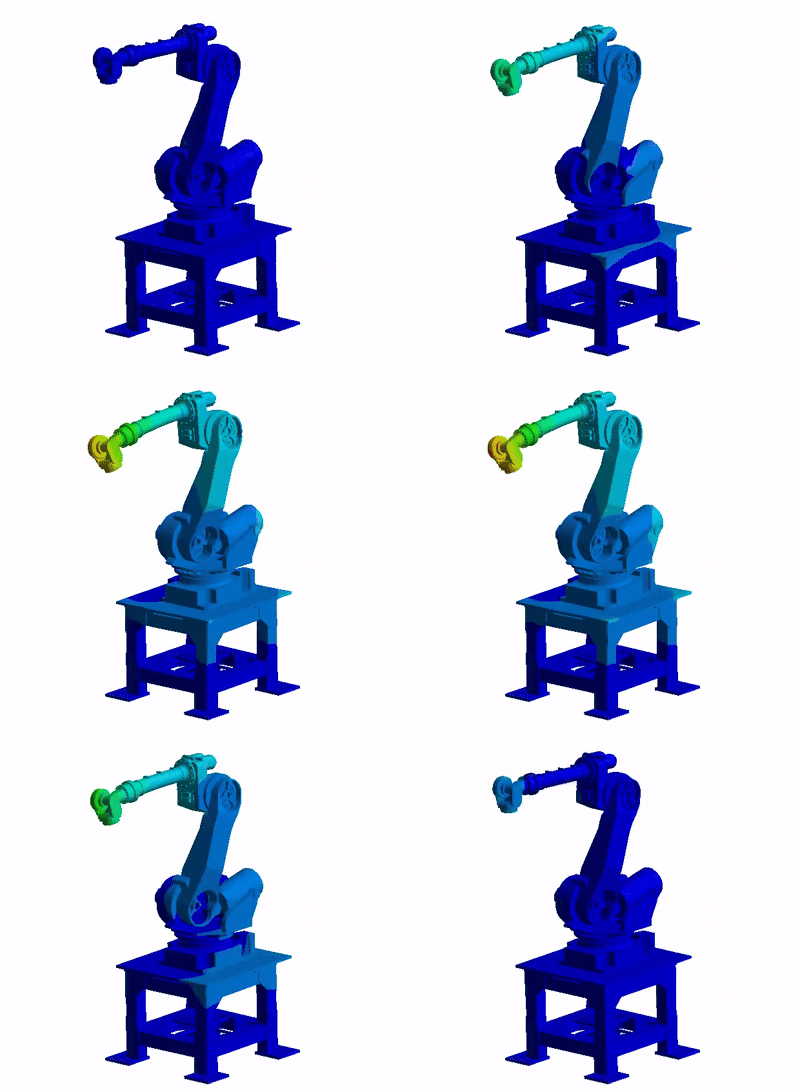
- • Evaluates structural strength and stiffness of each link and joint under operational loads.
- • Identifies stress hotspots to prevent fatigue, deformation, or joint failure.
- • Analyses dynamic behaviour during acceleration, deceleration, and rapid movements.
- • Optimizes geometry and material use for improved precision, durability, and weight reduction.
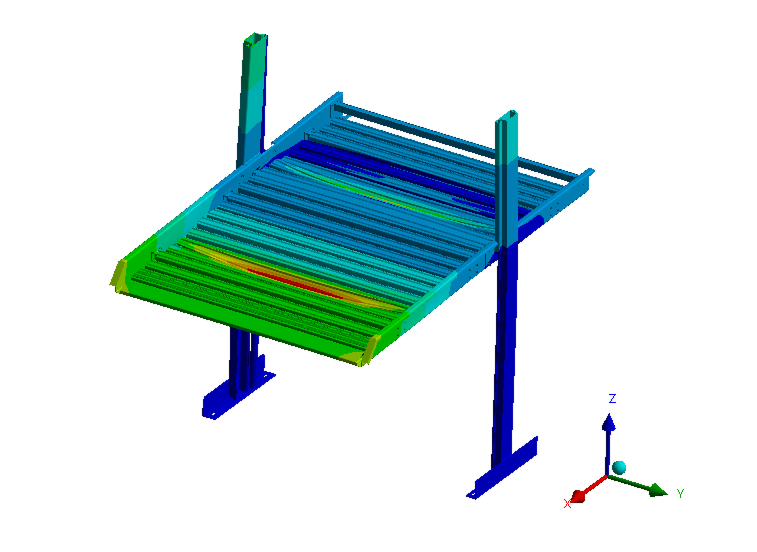
- • Assesses structural strength and load-carrying capacity under vehicle weight and dynamic loading.
- • Identifies stress concentrations in beams, plates, and welded joints to prevent failure.
- • Evaluates deformation and stability to ensure safe lifting, sliding, and parking operations.
- • Optimizes material usage and pallet geometry for durability, safety, and cost-effective manufacturing.